A Guide to the Gaelic Games
Ancient Irish sports with a rich history spanning over 3,000 years, now played by millions of people across every continent.
The Gaelic Games are a family of traditional Irish sports governed primarily by the Gaelic Athletic Association (GAA), founded in 1884 in Thurles, County Tipperary. The GAA is one of the largest amateur sporting organisations in the world with over 2,200 clubs across Ireland and a further 500+ clubs in communities abroad — including right here in the Benelux region.
The three main field sports — Hurling, Gaelic Football, and Camogie — are played on the same sized pitch and share the same H-shaped goalposts, but each has its own distinct character, skills, and traditions. Together with Ladies Gaelic Football, Handball, Rounders, and social formats like G4MO, the Gaelic Games offer something for everyone.
Hurling
The fastest field sport in the world
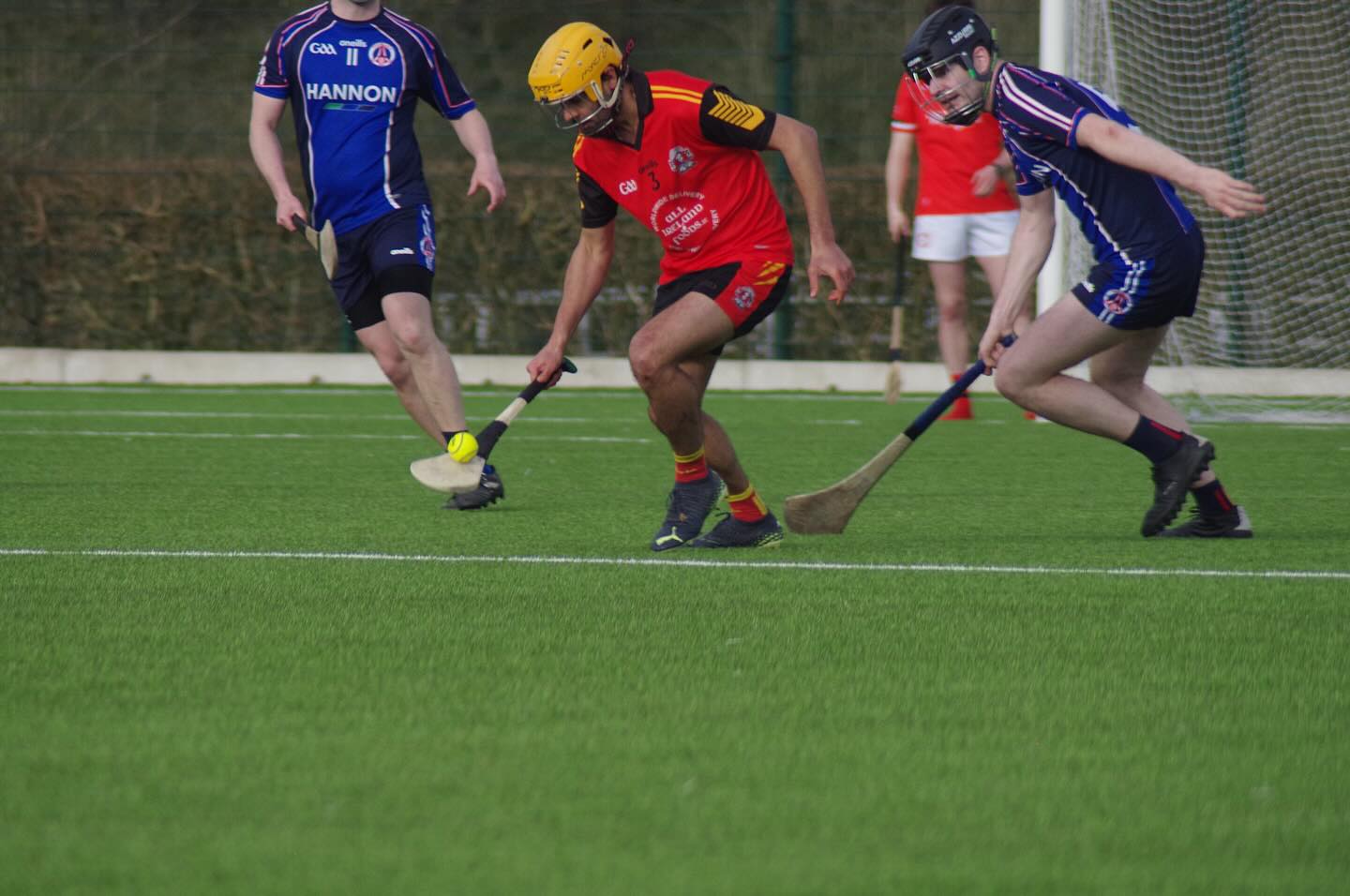
Hurling is an outdoor team sport of ancient Gaelic Irish origin, often described as a combination of field hockey, lacrosse, and baseball. It has been played for over 3,000 years, making it one of the oldest field games in the world. The sport is administered by the GAA (Gaelic Athletic Association).
Players (Ireland)
15 per side
Players (Europe)
13, 11, or 9 per side
Match (Ireland)
70 minutes (2 x 35)
Match (Europe)
Varies by format
Ball Speed
Up to 150 km/h
Equipment
Hurley & sliotar
How It's Played
- 1Two teams of 15 players compete on a grass pitch
- 2Players use a wooden stick called a hurley (camán) to hit a small ball called a sliotar
- 3The sliotar can be struck on the ground or in the air
- 4Players can catch the sliotar in their hand, carry it for up to four steps, and balance or solo it on the hurley while running
- 5A goal (3 points) is scored when the sliotar goes under the crossbar and into the net
- 6A point (1 point) is scored when the sliotar goes over the crossbar between the posts
Key Rules
- The ball may not be picked directly off the ground by hand — it must be lifted with the hurley
- A player may catch the ball once; after that, they must play it away or balance it on the hurley
- Players can hand-pass (strike with the open hand) or strike the ball with the hurley
- Shoulder-to-shoulder contact is permitted, but tripping, pushing, or pulling is a foul
- A helmet with a faceguard is mandatory for all players
Gaelic Football
Where skill meets athleticism
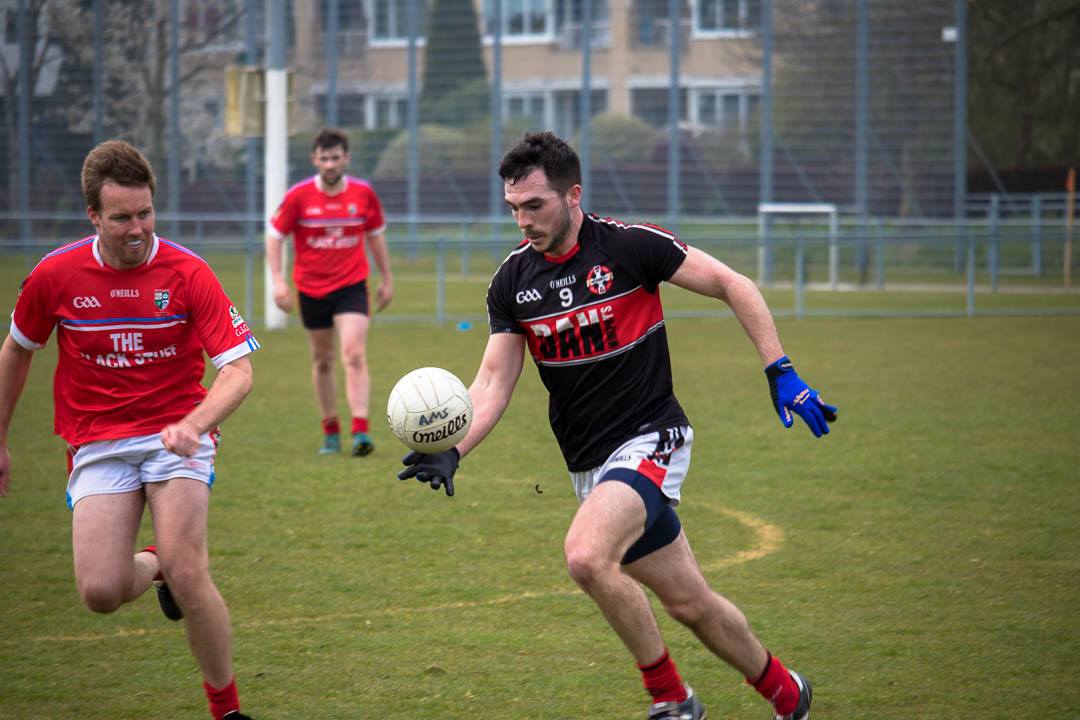
Gaelic Football is one of Ireland's most popular sports, combining elements of soccer, rugby, and basketball into a fast-paced, high-scoring contest. It is the most attended sport in Ireland, with the All-Ireland Senior Football Championship Final regularly drawing crowds of over 80,000 to Croke Park in Dublin.
Players (Ireland)
15 per side
Players (Europe)
13, 11, or 9 per side
Match (Ireland)
70 minutes (2 x 35)
Match (Europe)
Varies by format
Ball
Size 5 (similar to soccer ball)
Equipment
Boots & gumshield
How It's Played
- 1Two teams of 15 players compete on a grass pitch (the same dimensions as hurling)
- 2Players advance the ball by kicking, hand-passing (striking the ball with the fist), or soloing (dropping the ball onto the foot and kicking it back to the hands)
- 3The ball can be carried for a maximum of four steps before it must be bounced or soloed
- 4A goal (3 points) is scored by kicking or fisting the ball into the net beneath the crossbar
- 5A point (1 point) is scored by kicking or fisting the ball over the crossbar between the posts
Key Rules
- The ball cannot be thrown — it must be hand-passed (struck with the fist or open hand)
- Players may bounce the ball once, then must solo before bouncing again
- Picking the ball directly off the ground is not allowed — it must be scooped up with the foot
- Aggressive shoulder charges are permitted; pushing, tripping, or pulling an opponent is a foul
- The goalkeeper may pick the ball off the ground within the small rectangle
Camogie
One of the fastest-growing women's sports in Europe
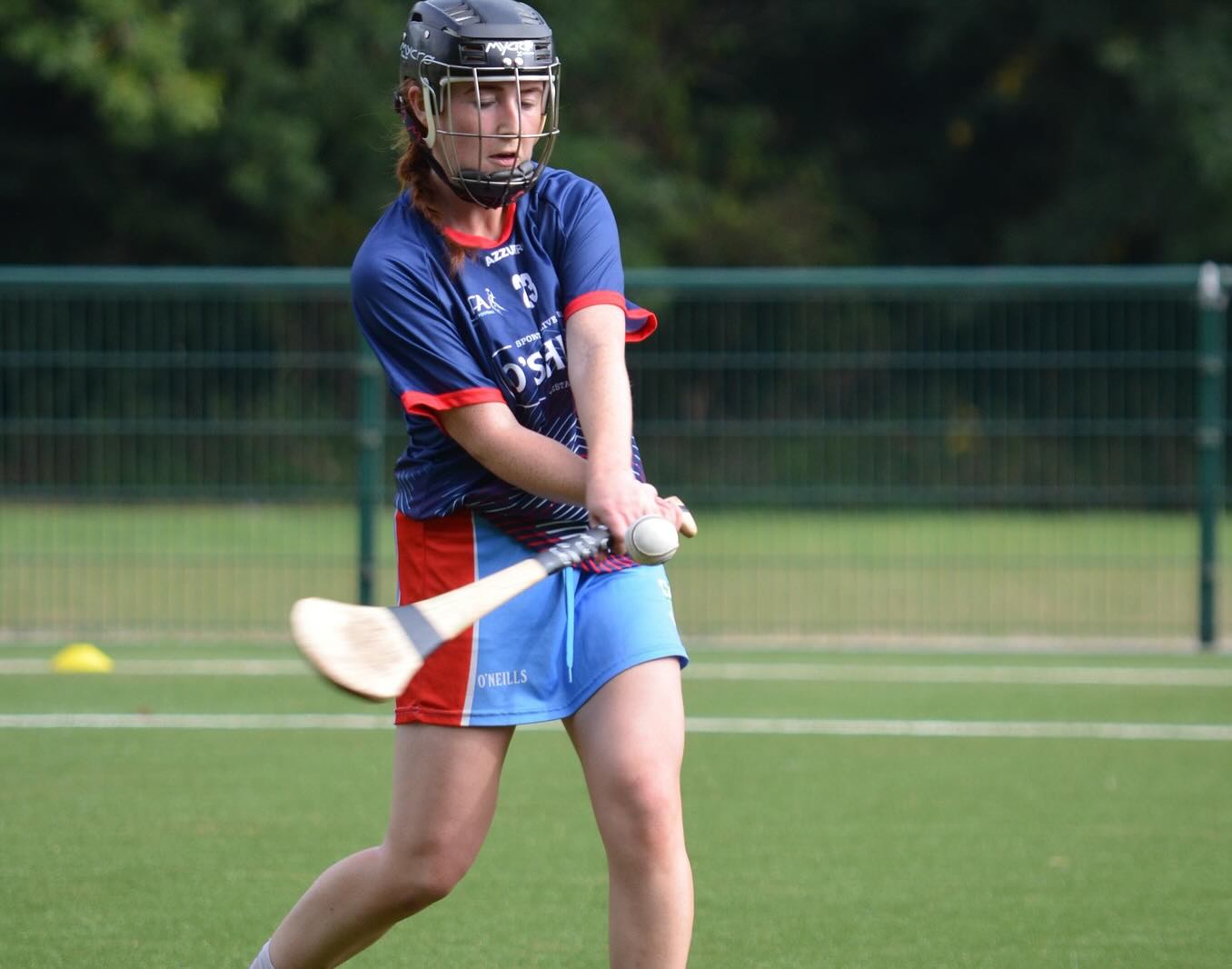
Camogie is the women's equivalent of hurling and is one of the few women's team sports that has its own distinct governing body — the Camogie Association (An Cumann Camógaíochta). It shares the same basic rules, skills, and equipment as hurling, with some minor rule variations. Camogie has seen enormous growth across Europe in recent years, with clubs in the Benelux region fielding increasingly competitive teams.
Players (Ireland)
15 per side
Players (Europe)
13, 11, or 9 per side
Match (Ireland)
60 minutes (2 x 30)
Match (Europe)
Varies by format
Equipment
Hurley, sliotar & helmet
Growth
Fastest-growing in Europe
How It's Played
- 1Two teams of 15 players compete on a grass pitch
- 2Like hurling, players use a hurley (slightly shorter and lighter) and a sliotar
- 3The same scoring system applies: goals (3 points) and points (1 point)
- 4All the core skills of hurling — striking, catching, soloing, blocking — are used in camogie
Key Rules
- Shoulder-to-shoulder challenges are permitted
- A helmet with faceguard is mandatory
- A free puck is awarded if the sliotar is hand-passed over the bar for a score
- Drop-pucks are used to restart play instead of throw-ins
- Matches are 60 minutes (compared to 70 in hurling)
Other Gaelic Games
Beyond the three main field sports, the Gaelic games family includes several other codes and social formats.
Ladies Gaelic Football (LGFA)
The women's version of Gaelic Football, governed by the Ladies Gaelic Football Association. It follows the same core rules as men's football with minor variations. LGFA is one of the largest women's sporting organisations in the world, and has a huge presence in European GAA.
Handball
GAA Handball is a sport where players hit a ball against a wall using their hands. It can be played as singles or doubles, indoors or outdoors. It shares origins with the other Gaelic games and is governed by GAA Handball.
Rounders
GAA Rounders is the bat-and-ball game of the Gaelic games family. Similar to baseball and softball, it is played between two teams who take turns batting and fielding. It's governed by the GAA Rounders Council.
Gaelic4Mothers & Others (G4MO)
A non-competitive, social version of Gaelic Football designed specifically for women aged 25+. G4MO focuses on fun, fitness, and friendship rather than competition, and has become hugely popular across European GAA clubs as a way for newcomers to get involved.
How Scoring Works
Goal
Ball goes under the crossbar
into the net = 3 points
Point
Ball goes over the crossbar
between the posts = 1 point
Example Score
2 goals + 14 points
= 20 total points
Play Gaelic Games in the Benelux
Whether you're a complete beginner or an experienced player, there's a club near you. Everyone is welcome — no experience necessary.